Fresh Linen Scent Laundry Detergent Sheets, 30-Piece Pack — Sheet-Format Laundry Care with Pet-Focused Packaging for Everyday Wash Routines
Fresh Linen Scent Laundry Detergent Sheets, 30-Piece Pack — Sheet-Format Laundry Care with Pet-Focused Packaging for Everyday Wash Routines
Couldn't load pickup availability

Fresh Linen Scent Laundry Detergent Sheets, 30-Piece Pack — Sheet-Format Laundry Care with Pet-Focused Packaging for Everyday Wash Routines
🐕 Life with Pets Leaves Stories in the Laundry Basket
The sweatshirt from a long walk. The towel used after an outdoor adventure. The everyday fabrics that make a home feel lived in. Sharing your space with a pet brings plenty of good moments, and a laundry routine that needs to keep pace with them.
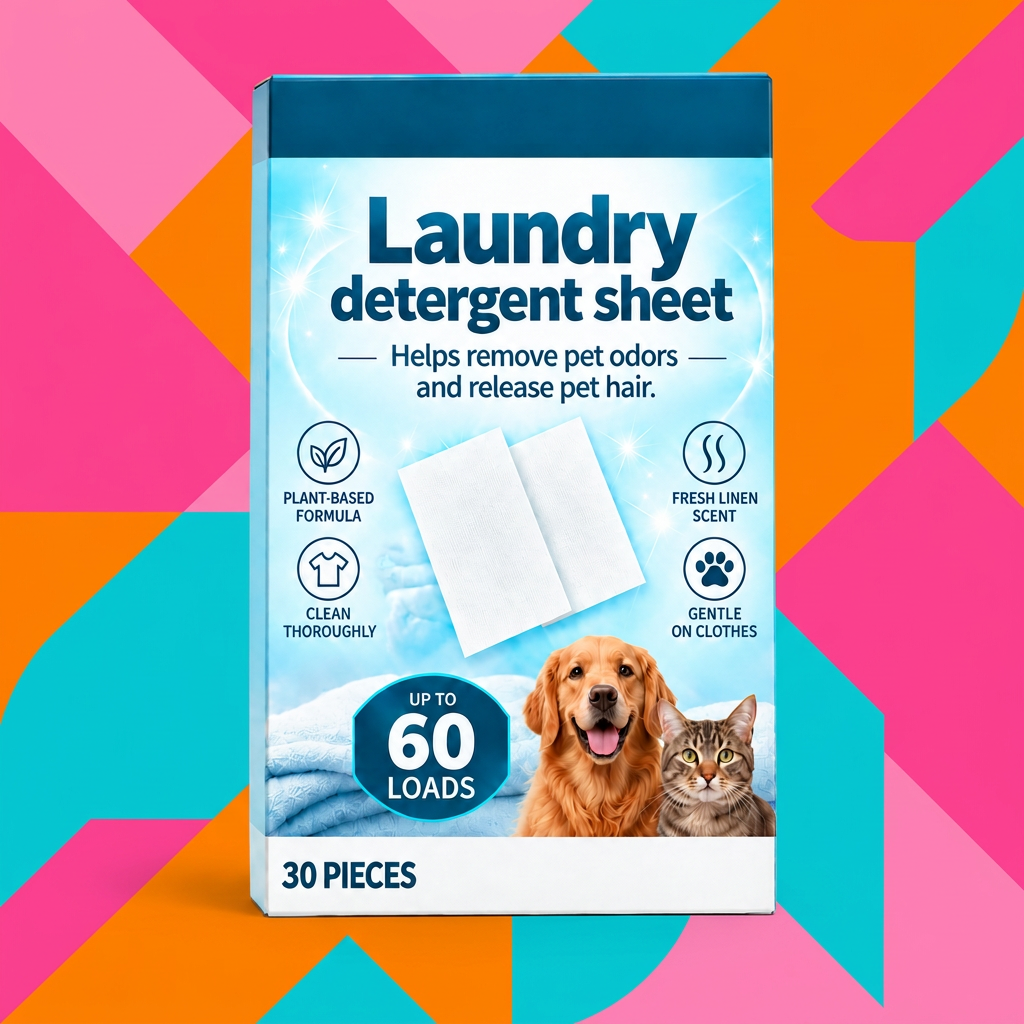
This Fresh Linen Scent laundry detergent sheet pack offers a sheet-format option for that routine. The blue carton is labeled 30 pieces and features a dog and cat on the front, alongside wording about helping remove pet odors and release pet hair. Those are packaging claims, not a promise that every fabric will come out hair-free or that every odor will disappear in one cycle.
If you are considering a different detergent format, begin with a clear picture of what is supplied and how it should be used. A recognizable carton, a stated piece count, and the manufacturer's complete directions provide a better starting point than an oversized performance promise.
🐈 The Week Starts with a Sort, Not a Shortcut
In a pet household, a laundry basket can contain very different items. A lightly worn shirt and a heavily used washable cover may need different handling. Before choosing a cycle, check each item's care label, separate unsuitable pieces, and follow the appliance guidance for removing loose debris and preparing the load.
Pet-themed packaging does not mean every pet accessory belongs in the washing machine. Some bedding, filled cushions, coated fabrics, or delicate items require another method. The textile's instructions remain important even when the detergent is marketed around pet-related laundry concerns.
Once the items are sorted, select the detergent amount and placement from the product directions. Do not assume that sheet format removes the need to consider load size, soil level, fabric requirements, or machine compatibility.
🗂️ Open the Product File: Four Details on the Front
It is laundry detergent in sheet form
The title on the carton identifies the product as a laundry detergent sheet. That distinguishes it from dishwasher sheets, surface-cleaning sheets, dryer sheets, and products used directly on an animal. Use it only for the laundry applications permitted by the complete label.
The pack is labeled 30 pieces
This is the visible piece count printed near the bottom of the front panel. A count of pieces is different from a fixed number of wash cycles, because the instructed dose may vary with the load and conditions.
The scent variant is Fresh Linen
The carton carries a Fresh Linen Scent label. It is not presented here as fragrance-free. The image does not establish fragrance ingredients, intensity, persistence, or suitability for anyone with a sensitivity.
The presentation is pet-focused
The printed dog and cat imagery and the front-panel wording place the product in a pet-household context. That context does not establish veterinary approval, safety for washing pets, or a guarantee that all pet-related textiles are suitable for it.
🧮 Two Numbers, Two Different Meanings
The front states 30 pieces and also displays Up to 60 loads. Both details matter, but they should not be combined into an invented dosing instruction.
The piece count identifies the labeled contents. The up-to load count is a conditional manufacturer claim whose applicable dosing conditions are not visible in the supplied front image. It is not a guaranteed sixty-cycle supply for every household.
Do not infer from these numbers that every wash requires half a sheet, or that a sheet should be torn along a particular line. Check the full dose chart, any preparation directions, and the instructions relevant to your machine before working out how many cycles the pack may provide for your loads.
🧥 A Closer Look at a Typical Laundry Day
You empty the basket and begin by separating garments from household textiles. The sweatshirt worn on a walk stays with compatible clothing; a washable cover is checked separately for its own care requirements. Anything with a special finish or uncertain instructions is set aside rather than added automatically.
The detergent carton comes from its dry storage area. You read the product's dose and placement directions, check the selected cycle against the fabric labels, and prepare the amount specified for the load. The remaining sheets return to their original packaging before the machine starts.
When the cycle ends, you inspect the items before choosing their approved drying method. If an item still needs attention, you follow appropriate care guidance rather than assuming that repeated detergent additions will solve the issue. The routine is thoughtful from sorting through drying, not just at the point of dosing.
🧾 Read Performance Wording with the Right Expectations
The pack says the product helps remove pet odors and release pet hair. That wording describes the manufacturer's intended benefit, but the reference does not provide test conditions, measured results, or a list of fabrics and soil types used in testing.
Hair and odor outcomes can differ across garments, loads, machines, and care methods. This page does not promise complete hair removal, a specific stain-removal rate, odor elimination, or success in a single wash. Fragrance is also not evidence that a fabric has been sanitized.
The carton includes plant-based formula and gentle-on-clothes language. A front-panel phrase is not a complete ingredient disclosure or a universal fabric-compatibility guarantee. Review the actual composition and instructions when choosing a detergent for particular materials or household requirements.
🧺 Give the Sheet Format a Clear Place in the Routine
A boxed sheet format offers a different way to keep detergent supplies organized. The rectangular carton has a clear front label and can remain with its instructions in a dedicated household-supply area, rather than requiring a separate unmarked storage container.
Keep the original package available so that the product identity, dose chart, and warnings remain connected to the contents. If you share laundry tasks with someone else, make sure they can find the complete directions rather than relying on a remembered amount.
The reference shows sheet illustrations printed on the front, not a detailed examination of a loose sheet. Exact sheet dimensions, thickness, perforations, wrapping, and handling characteristics are not established by this image.
🧭 Before the First Load: A Practical Check
- Check the machine guidance. Confirm the product is suitable for your appliance and follow the permitted placement. Universal front-loader, top-loader, or HE compatibility is not verified by the reference.
- Check the textile labels. Choose cycles and treatments appropriate to the items, especially delicate or specially finished fabrics.
- Read the complete dose instructions. Use the amount stated for the relevant conditions rather than converting the front-panel load claim into your own formula.
- Check fragrance and ingredient information. Fresh Linen Scent is a scented variant; suitability for sensitivities requires more than the package illustration.
- Keep product categories separate. This is detergent for approved laundry use, not pet shampoo, a grooming product, a flea treatment, or a disinfectant.
🚿 The Cycle Is Only One Part of Fabric Care
Good laundry planning extends beyond detergent selection. Respect machine capacity, follow loading instructions, and choose the fabric-approved cycle. Where an item needs a separate preparation step, use only a method that its care guidance permits.
After washing, follow the appropriate drying directions and check the condition of the item before storing it. A detergent sheet does not establish a safe drying temperature, prevent every kind of shrinkage, or make a delicate material suitable for machine drying.
For persistent problems, consult the product, textile, and appliance troubleshooting information. Do not mix detergent with other treatments unless the relevant manufacturers permit the combination.
🔒 Store for the Household, Not within Reach of the Household Pets
Keep the product in its original packaging and store it according to the label, protected from accidental water contact and out of reach of children and animals. The friendly pet pictures identify the marketing context; the contents are not treats and must not be given to pets.
Do not transfer sheets into a food container or leave them loose where they can be mistaken for another household item. Follow the warnings for handling and accidental exposure. If ingestion or exposure occurs, seek appropriate medical, poison-control, or veterinary advice as relevant and follow the product label.
The product image does not establish child-resistant packaging, hypoallergenic status, non-toxic certification, biodegradability, or a particular percentage of plant-derived ingredients. No such assurance is added here.
📘 Your Quick Reference before Checkout
Product: Laundry detergent sheets.
Variant: Fresh Linen Scent, as printed on the carton.
Labeled contents: 30 pieces.
Front-panel load claim: Up to 60 loads, subject to the manufacturer's actual dosing conditions and directions.
Packaging theme: Pet-household laundry concerns, with dog and cat artwork.
Not included: Laundry appliances, baskets, garments, folded towels, and decorative props shown in styled scenes.
🐾 Keep the Shared Moments. Plan the Laundry around Them.
A home with pets has its own rhythm, from the first walk of the morning to the last comfortable spot on the sofa. Your laundry supplies should fit that life with clear instructions and realistic expectations.
Consider this 30-piece Fresh Linen Scent detergent sheet pack if you want to explore a boxed sheet-format option for your washing routine. Confirm the ingredients, machine suitability, and dose first, then make it part of a well-planned process from the laundry basket to the shelf.