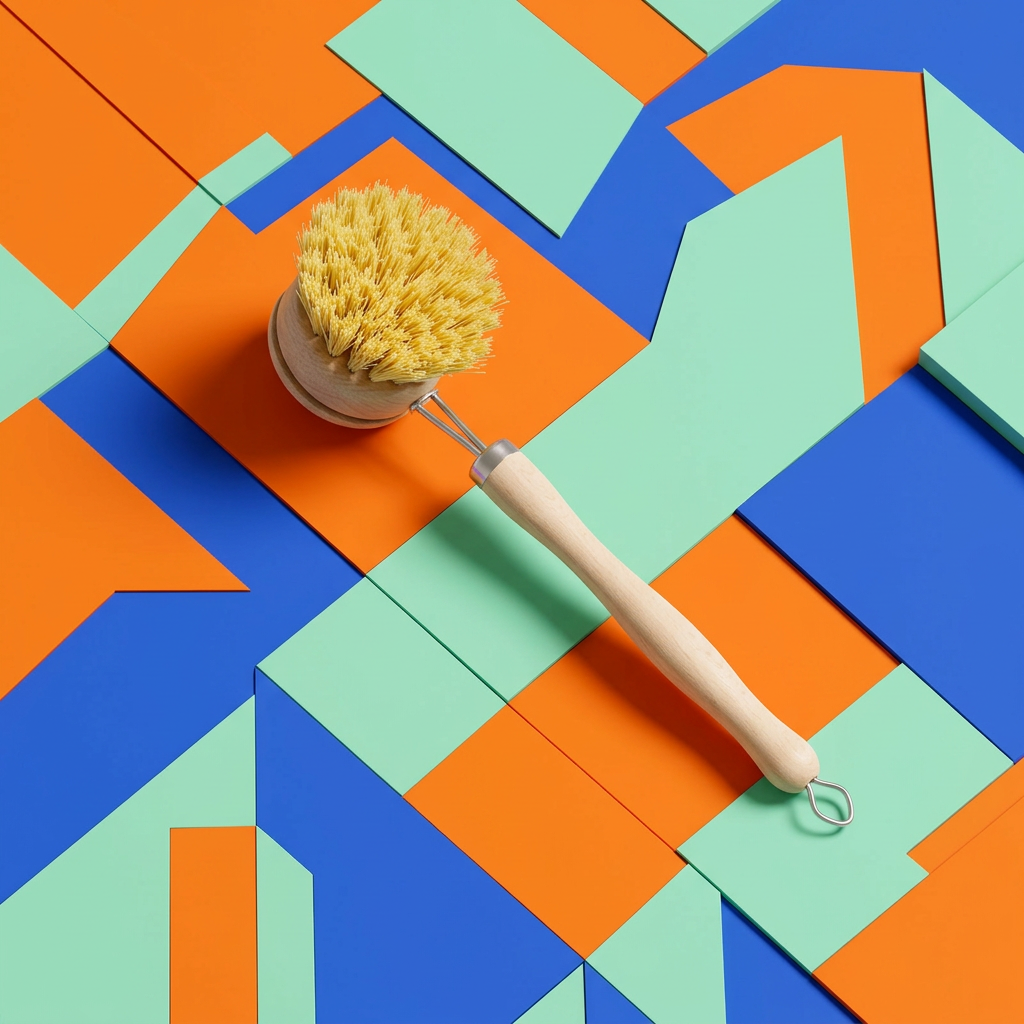
Long-Handle Dishwashing Brush with Round Bristle Head, Pale Wood-Tone Grip, Silver-Tone Neck & Hanging Loop for Sink-Side Organization
Long-Handle Dishwashing Brush with Round Bristle Head, Pale Wood-Tone Grip, Silver-Tone Neck & Hanging Loop for Sink-Side Organization
Couldn't load pickup availability

Long-Handle Dishwashing Brush with Round Bristle Head, Pale Wood-Tone Grip, Silver-Tone Neck & Hanging Loop for Sink-Side Organization
🖐️ A Familiar Chore, a More Thoughtfully Chosen Tool
Some of the most-used objects in a kitchen rarely receive a second look. The dish brush is one of them. It waits beside the sink, comes out after a meal, and returns to its place when the dishes are done. Choosing one with a clear, simple shape can make that ordinary routine feel a little more considered.
This long-handle dishwashing brush combines a pale wood-tone grip, a short silver-colored connecting neck, and a round head filled with yellow-tan bristles. A small metal loop at the handle end adds a visible hanging option. The result is a traditional-looking hand tool with contrasting textures and a restrained color palette.
It is not an automated cleaner or a substitute for choosing the right care method for your dishes. It is a manual brush you can guide, reposition, and put away deliberately, one item at a time.
🟡 Begin at the Working End: A Round Head with a Defined Bristle Face
The first detail to notice is the rounded head. Its pale backing creates a distinct outline behind the bristles, while the yellow-tan filaments fan across the working face. Unlike a flat cloth, the head gives you a visible point of contact to guide as you wash.
Use that shape to think about the task rather than applying the same motion to everything. An open plate offers a broad area. A bowl introduces a curved interior. A narrow vessel may not accommodate the brush at all. Always check fit and surface suitability instead of forcing a head into a space that does not match it.
The photograph shows the bristles' color and arrangement, but not their exact stiffness or fiber composition. They are not described here as natural plant fibers, animal hair, or a particular synthetic material. Nor does the image establish a scratch-free rating for delicate surfaces.
🪵 Move Along the Handle: Warm Color, Slender Outline
The long handle has a pale wood-tone appearance, a gently shaped profile, and subtle variations that give it visual warmth. It contrasts with the denser brush head rather than continuing the same round form along the entire tool.
The handle gives your hand a separate place to guide the working end. Hold it in a position that feels secure, maintain control of the dish with your other hand where appropriate, and avoid using extra force as a shortcut. The actual length and balance should be assessed from the product itself; no measurements are supplied by the reference.
The exact timber species, coating, and material composition have not been confirmed. For that reason, the description uses wood-tone rather than claiming bamboo, beech, a certified wood source, or a particular protective finish.
🪙 The Small Connection That Defines the Silhouette
A short silver-tone neck sits between the handle and the round head. It introduces a narrow visual break between the two pale sections and gives the brush its recognizable offset profile.
This visible connection should not be mistaken for proof of a replaceable head system. The reference does not demonstrate a release mechanism, spare-head compatibility, or a twist-to-remove feature. Keep the parts assembled unless the supplied instructions explain otherwise.
Likewise, a metallic appearance does not establish a specific alloy or rust-resistance grade. Follow the product care directions and inspect the connection during normal use so that a loose or damaged part does not go unnoticed.
🪝 Finish at the Tail: A Place to Hang It
A small loop is visible at the end of the handle. Where you have a suitable hook and enough clearance, that detail offers a way to organize the brush vertically instead of leaving it among the dishes.
Choose a storage position where drips can be managed and the brush will not fall into food-preparation areas. A hook or rail in a styled photograph is a storage suggestion, not an included accessory. Check the loop and the support before relying on a hanging arrangement.
The appeal of this detail is simple: your cleaning tool can have a recognizable place of its own. It does not need to disappear into a crowded drawer or remain underneath the next pile of plates.
☕ Three Sink-Side Moments, Three Different Approaches
The plate after a quick lunch
Remove loose food appropriately, select a detergent suitable for the dish, and support the plate securely. Use controlled brush movements on an approved surface rather than pressing harder when an area needs more attention. Rinse according to the dish-care and detergent directions.
The bowl after breakfast
A curved interior changes the way the brush meets the surface. Reposition the bowl as needed so you can see the area you are working on. Do not wedge the brush beneath a rim or force it into a narrow opening simply because the head is round.
The item that needs special care
A decorated plate, fine glass, polished finish, or coated pan may require a different cleaning tool. Check its manufacturer's instructions first. Sometimes choosing not to use a brush is the best way to care for a particular object.
💦 An Evening at the Sink, without the Rush
The last bowl comes back from the table, and you make a little space beside the sink. Fragile pieces go to one side. Items suitable for brushing stay within reach. You choose the appropriate detergent and begin with a dish that gives you a clear, open working area.
The pale handle sits apart from the bristle face as you guide the round head, pause to check the surface, and rinse the item when the cleaning step is complete. A stubborn spot is a reason to reconsider the method or follow approved soaking guidance, not to scrub blindly.
When the final piece is done, the brush receives attention too. You remove trapped residue as directed, rinse it appropriately, and return it to a storage position where it can dry. The whole routine ends with the tool ready to be checked before its next use, rather than forgotten under a wet cloth.
🧼 Care for the Brush as Part of the Wash-Up
- Check before use. Look for trapped residue, damaged bristles, or a loose connection. Do not continue using a damaged tool.
- Choose a suitable task. Confirm that the dish or cookware permits brush cleaning and that the head fits without being forced.
- Use an approved cleaning method. Follow the brush, detergent, and dish-care instructions, including any temperature or chemical restrictions.
- Clean the working head afterward. Remove residue and rinse using the product's recommended method rather than leaving food caught among the bristles.
- Allow appropriate drying. Follow the storage directions and avoid leaving the brush submerged or enclosed while damp unless the manufacturer specifically permits it.
The reference does not establish dishwasher suitability, a sterilization method, or a maximum soaking time. Do not assume that a manual dish brush should be cleaned in the same way as the dishes it is used on.
🎐 A Quiet Product Palette in a Colorful Kitchen
Pale wood tones, warm bristles, and a silver accent give the brush an understated appearance. That combination can sit comfortably alongside white ceramics and neutral worktops, or create a softer contrast against turquoise tiles and coral accessories.
In a bright kitchen, let the surrounding dishes and textiles provide the color while the brush remains visually consistent. In a quieter space, its rounded head and long handle add a small amount of shape and texture without a bold printed surface.
Bowls, plates, towels, sinks, hooks, and decorative objects shown in styled images are not included. They illustrate possible settings for a single brush, not a bundled kitchen collection.
🧩 Know What You Are Choosing
- Tool type: Manual long-handle dishwashing brush.
- Head appearance: Round pale backing with yellow-tan bristles.
- Handle appearance: Long, gently shaped, pale wood-tone grip.
- Connecting detail: Short silver-tone neck between handle and head.
- Storage detail: Small hanging loop visible at the handle end.
- Not verified from the image: Exact dimensions, material species, bristle composition, replaceable-head compatibility, and dishwasher suitability.
No antibacterial coating, environmental certification, nonstick compatibility guarantee, or fixed service life is claimed. Those details require confirmed product information, not an inference from the brush's appearance.
🌻 Choose One Small Detail You Will Use Every Day
A well-arranged sink area does not have to be elaborate. A suitable detergent, room to handle the dishes, and a cleaning tool with a place to return to can be enough to create a more deliberate routine.
Choose this round-head dishwashing brush for its recognizable combination of pale wood-tone handle, silver neck, warm bristle color, and hanging loop. Match it to the dishes it is suitable for, follow its care directions, and give an everyday kitchen essential the attention it deserves.